

Choosing the right coffee table can redefine how you experience your space every day. For those balancing work, relaxation, and hosting, this central piece acts as a functional anchor that influences both comfort and style. With modern designs now offering multifunctional features and materials that echo your taste, a thoughtful upgrade adds personality and practicality to any living room. Discover how today’s coffee tables can help you express yourself and shape a home you’re proud to share.
Table of Contents
- Defining The Role Of The Coffee Table
- Popular Coffee Table Styles And Materials
- Modern Features And Functionality Trends
- Risks, Costs, And Common Upgrade Mistakes
- Comparing Coffee Tables To Alternatives
Key Takeaways
| Point | Details |
|---|---|
| Coffee Table Functions | A coffee table serves as a social anchor, workspace, and storage solution, shaping how you use your living room. |
| Choosing the Right Design | Consider size, height, and durability to ensure your table complements your lifestyle without overwhelming the space. |
| Material Matters | Select materials based on maintenance needs and durability to match your lifestyle and aesthetic preferences. |
| Consider Alternatives | Evaluate if a conventional coffee table is necessary for your space, as alternatives like ottomans or nesting tables may be more suitable. |
Defining the Role of the Coffee Table
Your coffee table is far more than decorative furniture sitting in front of your sofa. It’s a functional anchor that shapes how you use your living room daily. Understanding its true purpose helps you choose one that matches your lifestyle.
A coffee table serves multiple functions simultaneously:
- Provides a surface for drinks, snacks, and remotes during movie nights
- Displays books, magazines, or decor that reflects your personality
- Creates a gathering point where conversations happen naturally
- Offers storage space for blankets, throw pillows, or magazines below the surface
- Defines the layout of your seating area and anchors the room’s design
The Social Anchor
Coffee tables facilitate informal gatherings and conversations in your living space. When friends visit, they naturally gravitate toward the coffee table. It becomes a focal point where people sit, chat, and connect over beverages.
This social function is crucial for young professionals. After long workdays, your home should feel like a place to unwind and host meaningful conversations. A well-chosen coffee table supports that experience.
The Practical Workhorse
Beyond socializing, coffee tables support various daily activities in your space. Whether you’re catching up on work emails, studying for certifications, or organizing your week, your table needs to accommodate these tasks.
Think about what actually happens at your coffee table. Do you eat meals there? Work on your laptop? Spread out magazines and inspiration boards? Your table should handle these activities gracefully.
Defining Success for Your Space
The right coffee table balances three essential elements. You can explore modern coffee table design options to see how others successfully combine these aspects.
These elements matter:
- Size and proportion: It should occupy roughly 2/3 of your sofa length
- Height alignment: Ideally level with your sofa cushion or 1-2 inches lower
- Surface durability: Can handle daily use without showing wear quickly
Your coffee table shouldn’t just look good—it should support how you actually live in your space.
Pro tip: Before buying, measure your current sofa length and the space between your sofa and TV. This single step prevents buying a table that looks cramped or oversized in your actual room.
Popular Coffee Table Styles and Materials
Your coffee table’s style and material choices define your living room’s entire aesthetic. These decisions affect how your space looks, functions, and ages over time. Choosing wisely means investing in pieces that align with both your design vision and lifestyle.
Material Options for Different Lifestyles
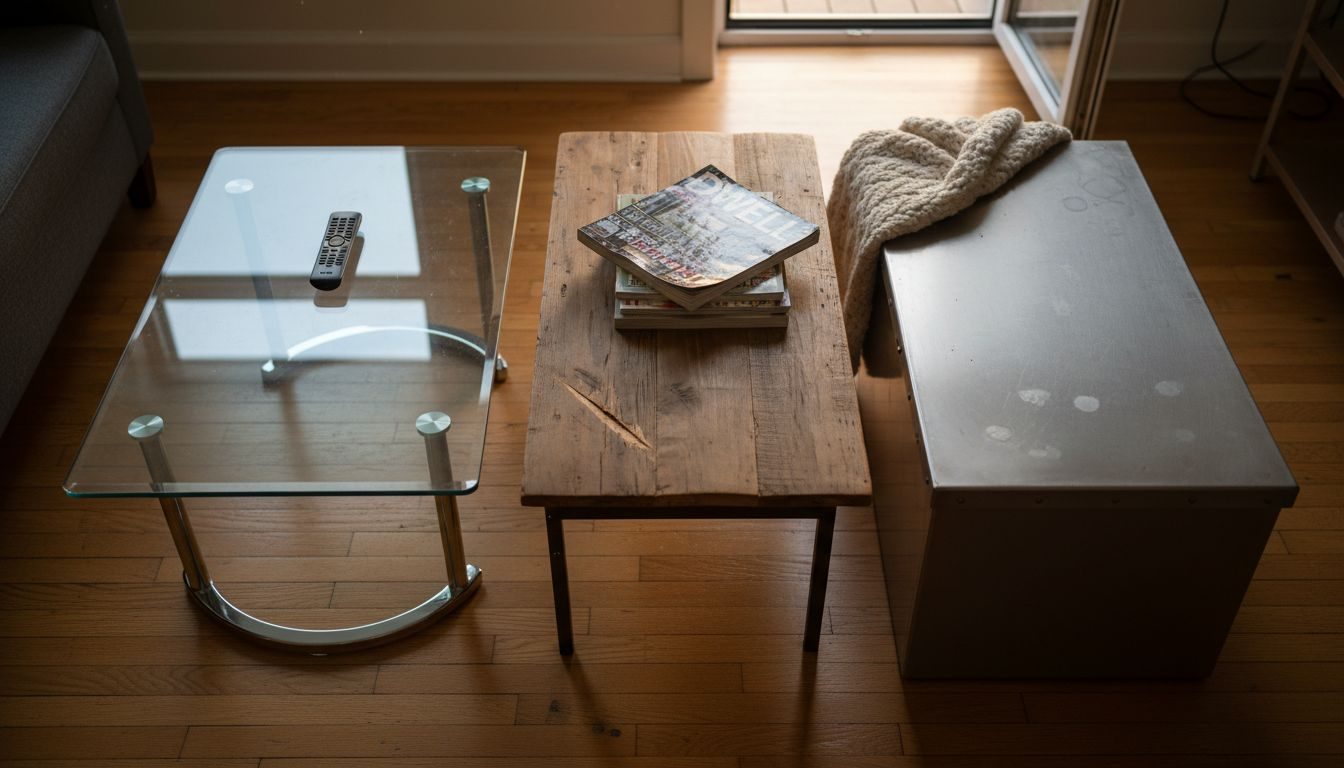
Coffee tables span styles from mid-century modern to rustic and industrial, with each material offering distinct advantages. Understanding material properties helps you pick something that survives your actual daily life.
Here’s what each material brings to your space:
Here is a quick comparison of popular coffee table materials and their suitability for different lifestyles:
| Material | Best For | Maintenance Needs |
|---|---|---|
| Wood | Families, cozy spaces | Occasional conditioning |
| Glass | Modern, smaller rooms | Frequent cleaning needed |
| Metal | Urban, active households | Low maintenance |
| Stone | Luxury, formal settings | Wipe spills promptly |
| Combinations | Versatile, mixed styles | Varies by materials |
- Wood: Timeless durability, natural warmth, improves with age and patina
- Glass: Creates spacious illusions, shows off clean lines, requires fingerprint maintenance
- Metal: Modern industrial vibes, pairs with various styles, resistant to damage
- Stone: Sophisticated appearance, extremely durable, feels luxurious and permanent
- Combination materials: Blends aesthetics with functionality across multiple styles
Design Styles That Resonate
Young urban professionals often gravitate toward specific aesthetics. Your choice depends on your apartment’s existing furniture and how much maintenance you’re willing to handle.
Consider your lifestyle when choosing materials. A glass table looks stunning but shows dust and fingerprints constantly. Wood requires occasional conditioning but develops character over years. Metal pieces withstand abuse but can feel cold without the right decor surrounding them.
Material choice isn’t just about looks—it’s about matching how you actually use your space daily.
Scale and Style Cohesion
Exploring stylish coffee table examples for urban homes shows how proportions matter in smaller spaces. Your table’s size must complement your sofa and overall room layout, not fight against it.
Material and style must work together:
- Metal frames suit minimalist and industrial aesthetics
- Wood works across traditional, mid-century, and rustic themes
- Glass complements contemporary and Scandinavian designs
- Stone adds luxury to transitional and modern spaces
Smaller apartments need tables that don’t overwhelm the room. Larger living spaces can handle bolder statement pieces that anchor the furniture arrangement visually.
The best material is one you’ll maintain consistently without frustration.
Pro tip: Visit a furniture showroom and physically touch different materials before buying online. Run your hand across wood finishes, press on glass thickness, and feel how metal edges are finished—this tactile sense reveals durability and quality that photos can’t convey.
Modern Features and Functionality Trends
Today’s coffee tables do far more than sit in your living room looking pretty. Modern designs blend style with practical features that solve real problems young professionals face daily. Understanding current trends helps you invest in pieces that feel relevant for years to come.
Multifunctional Design Takes Center Stage
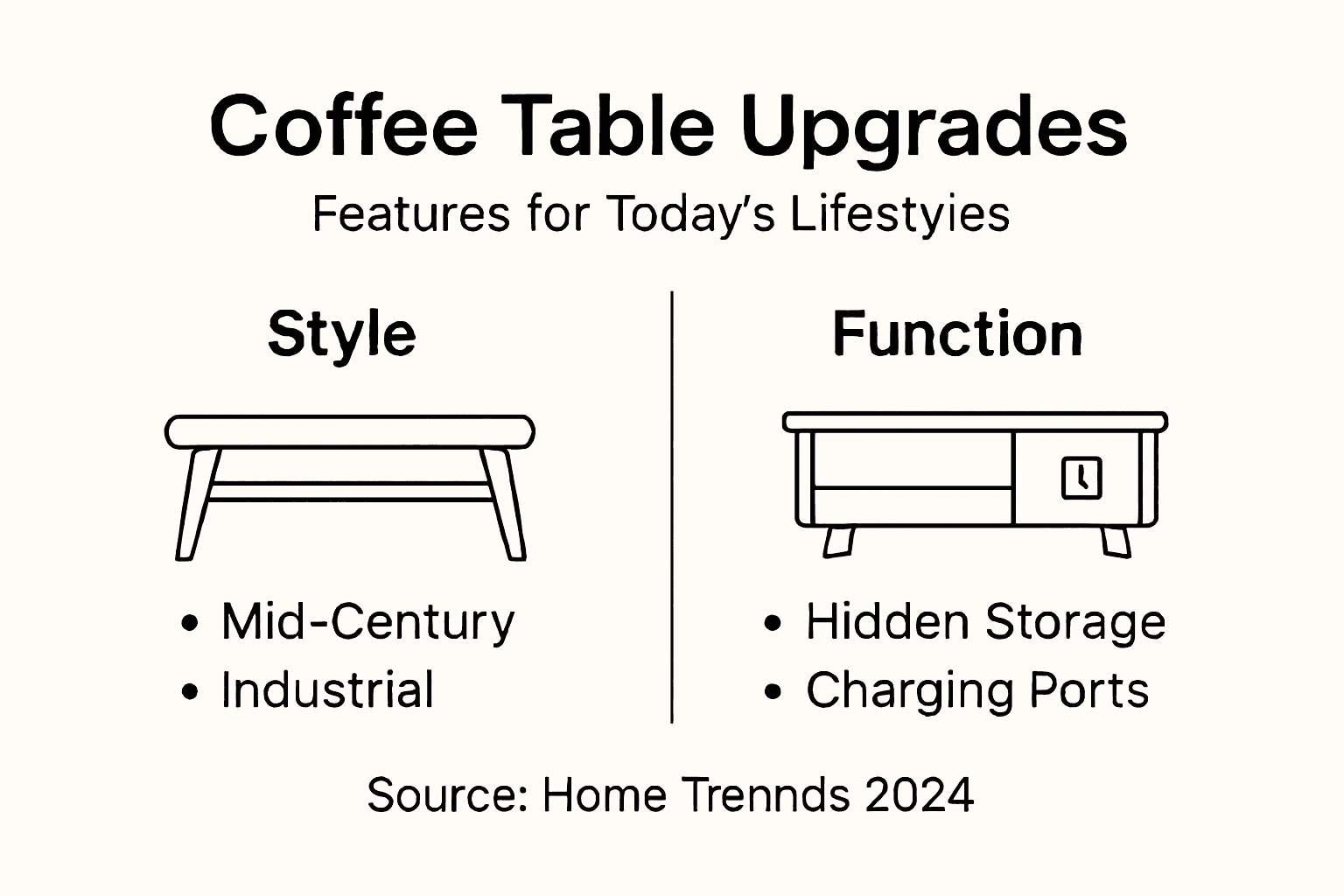
Multifunctional design, sustainability, and natural materials dominate modern coffee table trends. Your table should earn its space by serving multiple purposes without looking cluttered or over-engineered.
Key features reshaping the market include:
- Lift-top surfaces: Reveal hidden storage and double as workspace surfaces
- Hidden compartments: Store blankets, remotes, or work materials out of sight
- Modular construction: Rearrange or expand as your living situation evolves
- Built-in charging ports: Keep devices powered without visible cable chaos
- Integrated shelving: Display decor while maintaining clean lines
Smart Features for Remote Work Reality
Working from home changed how professionals use their living spaces. Your coffee table might become your secondary workspace, so functionality matters more than ever.
The modern coffee table market grows as consumers demand stylish yet functional pieces that adapt to lifestyle shifts. Tables with lift mechanisms work as standing-height work surfaces. Compact designs fit smaller urban apartments without compromising storage capacity.
Modern coffee tables balance aesthetics with utility, fitting contemporary living spaces that require adaptable furniture solutions.
Sustainability as Standard, Not Option
Young professionals increasingly care about environmental impact. Responsibly sourced materials and durable construction aren’t just buzzwords anymore—they’re baseline expectations for quality furniture.
Consider these sustainability factors:
- Choose tables made from certified sustainable wood sources
- Look for non-toxic finishes that don’t off-gas into your living space
- Prioritize construction quality that lasts decades, not seasons
- Select modular pieces you can repair rather than replace
The best modern coffee table anticipates how you’ll actually use your space tomorrow, not just today.
Pro tip: Check product specifications for charging port placement and hidden storage dimensions before purchasing—these features only add value if they’re positioned conveniently for your actual workflow and storage needs.
Risks, Costs, and Common Upgrade Mistakes
Upgrading your coffee table sounds straightforward until you realize how many ways this decision can go wrong. Most mistakes stem from not thinking through the practical implications before purchasing. Understanding common pitfalls helps you avoid expensive regrets.
The Sizing Trap
Common upgrade mistakes involve ignoring space constraints which lead to crowded or awkward room layouts. This happens constantly. You fall in love with a table online, it arrives, and suddenly your living room feels cramped.
Size-related errors include:
- Buying tables that overwhelm small apartments or studio spaces
- Choosing heights that don’t align with your sofa cushion level
- Neglecting to account for walkway clearance around the table
- Underestimating how legroom disappears with oversized designs
Measure twice, order once. Your apartment’s layout matters more than any design trend.
Style and Lifestyle Mismatches
You’re drawn to that pristine white marble table. You have two cats and host dinner parties weekly. This is a mismatch waiting to happen. Mistakes in material choice affect durability and maintenance costs significantly.
Common lifestyle clashes:
- Glass tables showing fingerprints and dust constantly
- Light finishes staining with daily use
- Delicate materials breaking under normal family activity
- Trending styles becoming dated within two years
Your table should match your actual habits, not your Instagram aspirations.
Choose materials and styles you’ll genuinely maintain without frustration.
The Cost Escalation Problem
Custom designs and premium materials add up faster than you expect. What starts at $400 becomes $800 with delivery, assembly, and protective treatments. Urban young professionals often underestimate these hidden expenses.
Budget realities to consider:
- Base table price
- Delivery and assembly fees
- Protective coatings or finishes
- Ongoing maintenance products
- Potential replacement if initial choice fails
Premium prices don’t guarantee longevity—smart material and style choices do.
Pro tip: Set your total budget at 30-40% less than you think you can spend, then use the remaining cushion for quality upgrades or extended warranties that actually protect your investment.
Comparing Coffee Tables to Alternatives
A traditional coffee table isn’t always the right choice for every living space. Sometimes alternatives solve your layout, budget, or functional needs better. Understanding your options helps you make the decision that actually works for your apartment.
When Alternatives Make More Sense
Not every living room needs a coffee table. Small studios, awkwardly shaped spaces, or minimalist aesthetics might call for something different. Before automatically buying a table, evaluate whether one truly serves your lifestyle.
Ask yourself these questions:
- Do you actually need a surface for drinks and remote storage?
- Will a traditional table create walkway congestion in your space?
- Are you hosting enough people to justify the furniture footprint?
- Would something more flexible better match your living situation?
Honest answers reveal whether you need a traditional table or something else entirely.
Coffee Table Alternatives Worth Considering
Ottomans, nesting tables, and side tables provide versatile solutions when a conventional coffee table isn’t practical. Each alternative handles different spatial and functional needs effectively.
Top alternatives include:
To help you choose, here is a comparison of traditional coffee tables and their common alternatives:
| Option | Space Usage | Storage Potential | Flexibility |
|---|---|---|---|
| Coffee Table | Medium/large | Moderate (surface/shelf) | Fixed position |
| Ottoman | Compact/flexible | Ample (hidden inside) | Doubles as seating |
| Nesting Tables | Minimal/dynamic | Limited (surface only) | Reconfigurable layout |
| Side Table | Minimal | Very limited | Moves easily |
| Trunk-Style Table | Large | High (internal storage) | Adds visual impact |
- Ottomans: Add comfort, double as seating, provide hidden storage underneath
- Nesting tables: Expand surface space when needed, collapse for compact living
- Side tables: Keep surfaces minimal while maintaining drink and remote placement
- Benches: Create additional seating while functioning as a surface
- Trunk-style tables: Combine storage, style, and conversation functionality
Comparing Function and Lifestyle Fit
Your living space demands specific solutions. Studio apartments benefit from nesting tables that expand only when guests arrive. Open lofts work better with ottomans that offer seating flexibility. Remote workers might prefer nothing at all, prioritizing open floor space instead.
The best choice serves your actual lifestyle, not what design magazines say you should have.
The Real Cost Comparison
Alternatives often cost less than traditional coffee tables while solving specific problems. A quality ottoman might cost $250 versus $400 for a comparable table. Nesting tables give you expandability without the footprint commitment.
Consider the total value:
- Initial purchase price of the piece
- Functionality it adds to your specific space
- How long you’ll actually use it
- Flexibility if your living situation changes
- Storage or seating bonuses beyond primary function
Pro tip: Spend two weeks using your living room without any center piece, measuring how you naturally move and what surfaces you actually need—this real-world data beats any design theory when choosing between a traditional table or an alternative.
Elevate Your Living Space with the Perfect Coffee Table
Struggling to find a coffee table that truly fits your lifestyle and elevates your home’s style The article highlights common challenges like sizing mistakes, material mismatches, and lack of multifunctionality all of which impact your living room’s comfort and value. At New Way Ref, we understand how important a coffee table is as both a centerpiece and a practical hub for your daily routines.
Explore our diverse collection in Home Decor that features modern, stylish, and durable coffee tables designed to meet your unique needs Whether you want hidden storage, lift-top functionality, or a design that complements your sofa perfectly our curated selection combines style, function, and lasting value. Visit New Way Ref now and upgrade your space with furniture that supports how you live—because your home deserves nothing less.
Frequently Asked Questions
What are the main functions of a coffee table?
A coffee table serves multiple purposes such as providing a surface for drinks and snacks, displaying decor and books, serving as a gathering point for conversations, and offering storage options underneath.
How do I choose the right size for my coffee table?
The ideal coffee table should occupy roughly two-thirds of your sofa’s length and be at a height level with your sofa cushions or slightly lower, ensuring comfort and accessibility.
What materials should I consider when upgrading my coffee table?
Common materials for coffee tables include wood, glass, metal, and stone. Each offers different advantages like durability and maintenance needs, so consider your lifestyle when making a choice.
What modern features should I look for in a coffee table?
Consider multifunctional designs that offer features like lift-top surfaces for hidden storage, integrated charging ports, and modular construction. These features enhance functionality and adaptability for modern living.