

TL;DR:
- Accent chairs serve as functional seats and visual focal points that enhance a room’s personality. Proper placement, scale, and style selection ensure they balance with existing furniture and create inviting conversation areas. Choosing the right accent chair involves considering its purpose, size, visual weight, and strategic positioning within the space.
An accent chair is a single, stylish seat designed to add both extra seating and a strong visual focal point to any room. Unlike sofas or sectionals, accent chairs work as standalone design statements. They introduce color, pattern, and texture without requiring a full furniture overhaul. Popular styles include the barrel chair, slipper chair, wingback, club chair, and tub chair. Interior designers like Emily Henderson and sources like Inspired Decor Lab consistently point to accent chairs as one of the most flexible tools for shaping a room’s personality. Understanding why use accent chairs starts with recognizing their dual role: functional seating and intentional style.
What are the main benefits of accent chairs in your home?
Accent chairs serve as design focal points and provide secondary seating that enriches a room’s personality and functionality. That dual purpose makes them one of the most cost-effective upgrades for any living space.
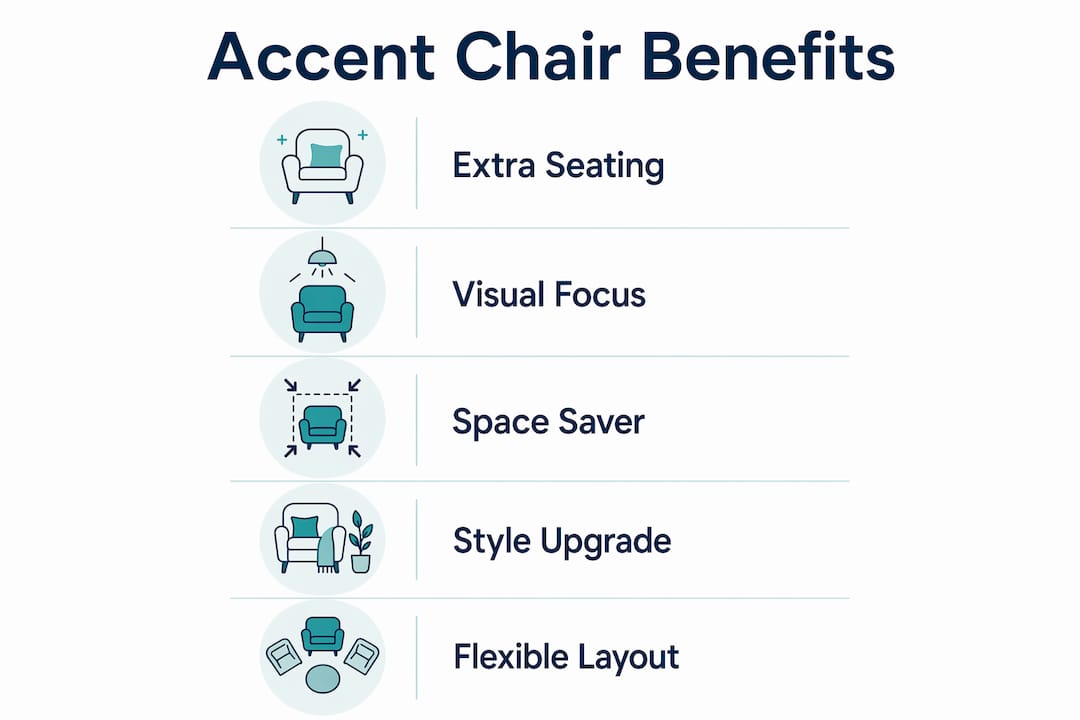
The core benefits of accent chairs include:
- Extra seating without bulk. A single accent chair adds a seat for guests without the visual weight of a loveseat or second sofa. In open-plan apartments, this keeps the layout feeling light and open.
- Color, pattern, and texture contrast. Accent chairs introduce color and texture to tie together or accentuate a room’s palette without matching the sofa exactly. A rust velvet chair against a gray sofa creates contrast that feels intentional, not accidental.
- Filling awkward spaces. Bare corners, underused bedroom nooks, and empty entryway walls all become purposeful with a well-placed chair.
- Creating a focal point. A chair in a bold print or unexpected silhouette draws the eye and anchors the room’s visual flow.
- Flexibility. Accent chairs move easily between rooms. A chair that works in the living room today can shift to a home office or bedroom tomorrow.
Pro Tip: Before buying, carry a dining chair to the spot you are considering. If the scale feels right and the corner looks purposeful, an accent chair will work there.
Accent chairs also replace sofas in small apartments, creating a lighter and more flexible seating layout. Two well-chosen accent chairs can substitute for a sofa entirely in a studio apartment, freeing up significant floor space.
How to choose the right accent chair for your space
Choosing an accent chair well means matching it to your existing furniture in scale, height, and visual weight. Getting this wrong is the most common mistake homeowners make.
Scale and seat height
Keep accent chair seat heights within 4 inches of your sofa’s seat height to avoid awkward seating arrangements. When seat heights differ too much, conversations feel uneven and the furniture grouping looks mismatched. Standard seat depth runs 18–22 inches, and overall width typically falls between 28–34 inches. Chairs wider than 36 inches may compete visually with the sofa rather than complement it.
Visual weight and silhouette
Pair heavy, boxy sofas with chairs that have exposed legs, and pair leggy sofas with more grounded chairs to prevent mismatched visual weight. This principle from Emily Henderson’s design rules produces harmony without requiring identical fabrics or styles. A chunky linen sofa paired with a slim-legged barrel chair in a contrasting fabric creates balance. A low-profile sectional pairs well with a taller wingback that adds vertical interest.
The visual work vs. physical work test
Designers suggest a “visual work vs. physical work” test to match chair form with actual usage needs. Ask yourself: will this chair be used for long reading sessions, or will it mostly look good? A slipper chair answers the first question poorly but the second brilliantly. A club chair or wingback handles both. Choosing based on honest use prevents buying a beautiful chair that nobody sits in.
| Chair type | Best use | Seat depth | Visual weight |
|---|---|---|---|
| Barrel chair | Decorative, small spaces | Shallow | Medium |
| Slipper chair | Accent, occasional use | Shallow | Light |
| Wingback | Reading, lounging | Deep | Heavy |
| Club chair | Extended sitting | Deep | Heavy |
| Tub chair | Decorative, conversation | Medium | Medium |
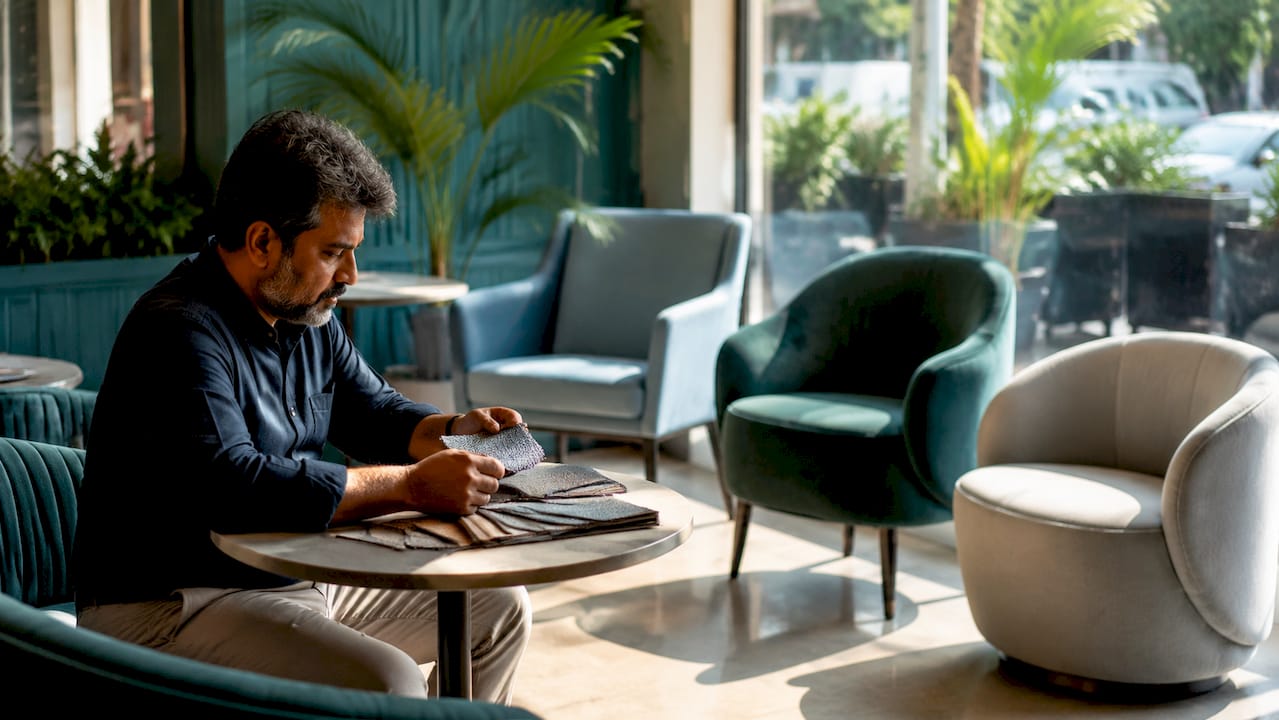
Pro Tip: Bring a fabric swatch from your sofa when shopping. Hold it against the chair’s upholstery in natural light. Colors that clash under store lighting often look worse at home.
What are effective placement strategies for accent chairs?
Placement determines whether an accent chair feels like part of the room or an afterthought. The right position creates conversation flow, visual balance, and a sense of purpose.
- Angle toward the sofa. A 45-degree angled placement facing the sofa creates a conversational triangle, enhancing interaction and inviting seating. This angle softens the rigid geometry of most living rooms.
- Maintain clearance. Allow 18–30 inches of clearance from surrounding furniture for comfortable movement. Less than 18 inches feels cramped. More than 30 inches breaks the visual connection between pieces.
- Build a vignette. A chair, a floor lamp, and a small side table form a complete vignette that anchors a corner and makes it feel designed. This trio works in living rooms, bedrooms, and home offices equally well.
- Activate dead corners. Most rooms have at least one corner that collects clutter or sits empty. An accent chair with a lamp turns that corner into a reading nook or a quiet seat.
- Use pairs strategically. Two matching accent chairs facing a sofa create a formal, symmetrical arrangement. Two different chairs in coordinating fabrics create an eclectic, collected look that feels more personal.
| Room | Placement idea | Effect |
|---|---|---|
| Living room | 45-degree angle to sofa | Conversational cluster |
| Bedroom | Corner near window | Reading nook |
| Entryway | Against wall near door | Functional landing spot |
| Home office | Beside desk or bookshelf | Casual meeting seat |
For arranging living room furniture effectively, the chair’s position relative to the rug matters too. All four legs on the rug feels anchored. Front legs only feels connected but lighter. No legs on the rug isolates the chair visually.
What types of accent chairs suit different rooms and styles?
The style of accent chair you choose shapes the entire mood of a room. Each type carries a distinct silhouette and serves a different purpose.
- Barrel chair. Round back, compact footprint, works well in small living rooms and apartments. Its curved shape softens angular furniture and adds a modern or mid-century feel. Barrel chairs suit accent chairs for small spaces particularly well.
- Slipper chair. Armless, low profile, and purely decorative. Best used in bedrooms or as a second accent piece in a larger living room. Not ideal for long sitting sessions.
- Wingback chair. High back, pronounced wings, strong vertical presence. Works in traditional and transitional interiors. Excellent for reading corners and home libraries. Pairs well with floor lamps and side tables.
- Club chair. Wide, deep, and upholstered fully. Feels substantial and inviting. Works in living rooms and home offices where comfort matters as much as style. Leather club chairs are a classic choice for masculine or industrial interiors.
- Tub chair. Curved back that wraps around the sides, similar to a barrel but more enclosed. Works well in entryways and bedrooms. Adds a retro or Art Deco touch depending on the fabric.
Current trends favor rounded, organic shapes and tactile fabrics like boucle, velvet, and textured linen. These choices add sensory depth to a room beyond just visual interest. A boucle tub chair in cream or ivory reads as both current and timeless. For guidance on how accent furniture works across different room types, the style principles stay consistent: contrast, scale, and purpose.
Key Takeaways
Accent chairs deliver the most value when chosen for both visual weight and actual use, then placed at a deliberate angle with proper clearance to anchor the room’s seating arrangement.
| Point | Details |
|---|---|
| Match seat heights | Keep accent chair seat height within 4 inches of your sofa to avoid awkward groupings. |
| Balance visual weight | Pair boxy sofas with light-legged chairs and leggy sofas with grounded chairs for harmony. |
| Place at 45 degrees | Angle chairs toward the sofa to create a natural conversational triangle. |
| Test function first | Use the visual work vs. physical work test to choose between decorative and comfort-focused styles. |
| Activate dead corners | A chair, lamp, and side table turn any empty corner into a purposeful, styled vignette. |
What I have learned from placing accent chairs in real rooms
The biggest mistake I see homeowners make is buying an accent chair they love in isolation, then placing it flush against a wall and wondering why the room still feels flat. A chair pushed to the perimeter becomes wallpaper. Pull it forward, angle it toward the sofa, and the entire room shifts.
I have also found that matching furniture sets are overrated. Matching scale and visual weight produces more harmony than matching fabric or finish. A velvet wingback next to a linen sofa looks intentional when the proportions are right. The same chair next to an oversized sectional looks like a mistake, regardless of how well the colors coordinate.
The “visual work vs. physical work” test changed how I advise people. Most homeowners want a chair that looks beautiful and feels comfortable. Those two goals often pull in opposite directions. A slipper chair photographs beautifully but nobody sits in it for more than ten minutes. A club chair disappears into the background but becomes the most-used seat in the house. Decide which matters more before you buy.
One practical habit I recommend: tape out the chair’s footprint on the floor before purchasing. Use painter’s tape to mark the width and depth. Live with that outline for two days. If the space feels right and the traffic flow still works, buy the chair. If the tape keeps getting in the way, the chair is too large for that spot.
Accent chairs are one of the few furniture pieces where a single choice can visibly change a room’s character. Use that power deliberately.
— Enn
Accent chairs and home furnishings at Newwayref
Newwayref offers a curated selection of accent chairs and home furnishings designed to fit real living spaces, from compact apartments to larger family rooms.
Whether you are looking for a bold statement chair or a subtle complement to your existing sofa, the Newwayref collection covers a range of styles, fabrics, and price points. Free shipping applies to orders over $50, making it practical to add a quality accent chair without extra cost. Browse the full selection to find a chair that fits your space, your style, and how you actually live in your home.
FAQ
What is an accent chair used for?
An accent chair provides extra seating and acts as a visual focal point in a room. It introduces color, pattern, or texture that complements the primary furniture without matching it exactly.
How do I know what size accent chair to buy?
Choose a chair with a seat height within 4 inches of your sofa and a width between 28–34 inches. Chairs wider than 36 inches tend to compete visually with the sofa rather than complement it.
Can accent chairs work in small apartments?
Accent chairs work well in small apartments and can even replace a sofa entirely for a lighter, more flexible layout. Barrel and slipper chairs are the best choices for tight spaces because of their compact footprint.
Where is the best place to put an accent chair?
Position an accent chair at a 45-degree angle toward the main sofa with 18–30 inches of clearance from surrounding furniture. This placement creates a natural conversational flow and keeps the room feeling open.
Do accent chairs need to match the sofa?
Accent chairs do not need to match the sofa in fabric or color. Visual weight and scale matter more than matching materials, so focus on proportion and silhouette for a harmonious result.