

TL;DR:
- To successfully mix decor styles, apply the 60-30-10 rule, balancing dominant, secondary, and accent pieces. Neutral bases and a limited color palette create cohesion, while bridge pieces unify different styles. Patience and deliberate editing are essential for authentic, layered, and intentional interior design.
Most homeowners love the idea of a home that feels personal and layered, but the moment they actually try combining styles, something feels off. A mid-century sofa next to a rustic wood table. A traditional rug under modern chairs. Suddenly the room looks random instead of curated. This guide to mixing decor styles gives you a clear, proven framework to combine pieces confidently. You will learn the rules designers rely on, the mistakes that trip most people up, and exactly how to create a space that feels intentional, not accidental.
Table of Contents
- Key takeaways
- The foundation of mixing decor styles
- How to mix decor styles step by step
- Common mistakes when combining design styles
- Knowing when your style mix is working
- My honest take on mixing styles
- Transform your space with Newwayref
- FAQ
Key takeaways
| Point | Details |
|---|---|
| Use the 60-30-10 rule | Split your room into 60% dominant style, 30% secondary, and 10% accent pieces for natural balance. |
| Anchor with a neutral base | Neutral walls and large furniture pieces give bolder mixed elements a clean foundation to work from. |
| Limit your color palette | Sticking to 3 to 4 complementary colors keeps mixed styles from feeling chaotic or disconnected. |
| Bridge pieces do the heavy lifting | Select furniture or accessories that share traits of both styles to help the room feel unified. |
| Edit as often as you add | Removing competing pieces restores balance just as effectively as buying the right new ones. |
The foundation of mixing decor styles
Before you move a single piece of furniture, you need a framework. Without one, combining styles becomes guesswork. With one, it becomes design.
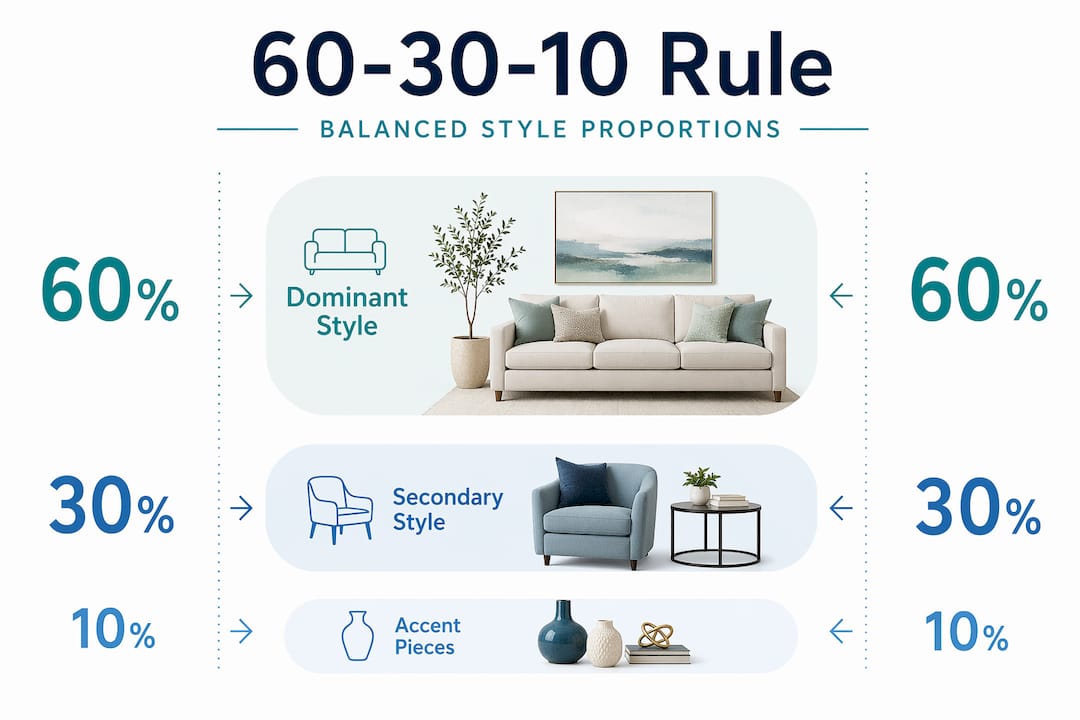
The most reliable starting point is the 60-30-10 rule: 60% of your room reflects your dominant style, 30% introduces a secondary style, and 10% goes to accent pieces that add personality. Think of it like getting dressed. Your outfit has a main look, a secondary element like a jacket or layer, and one statement piece that ties it together. The same logic applies to your living room.
Your neutral base matters more than most people realize. Neutral walls, large rugs, and curtains act as peacekeepers in eclectic interiors. They give the eye a place to rest between bolder elements. When your sofa, walls, and rug are all working hard stylistically, the room exhausts you. Start calm and build up from there.
Keeping your color palette tight
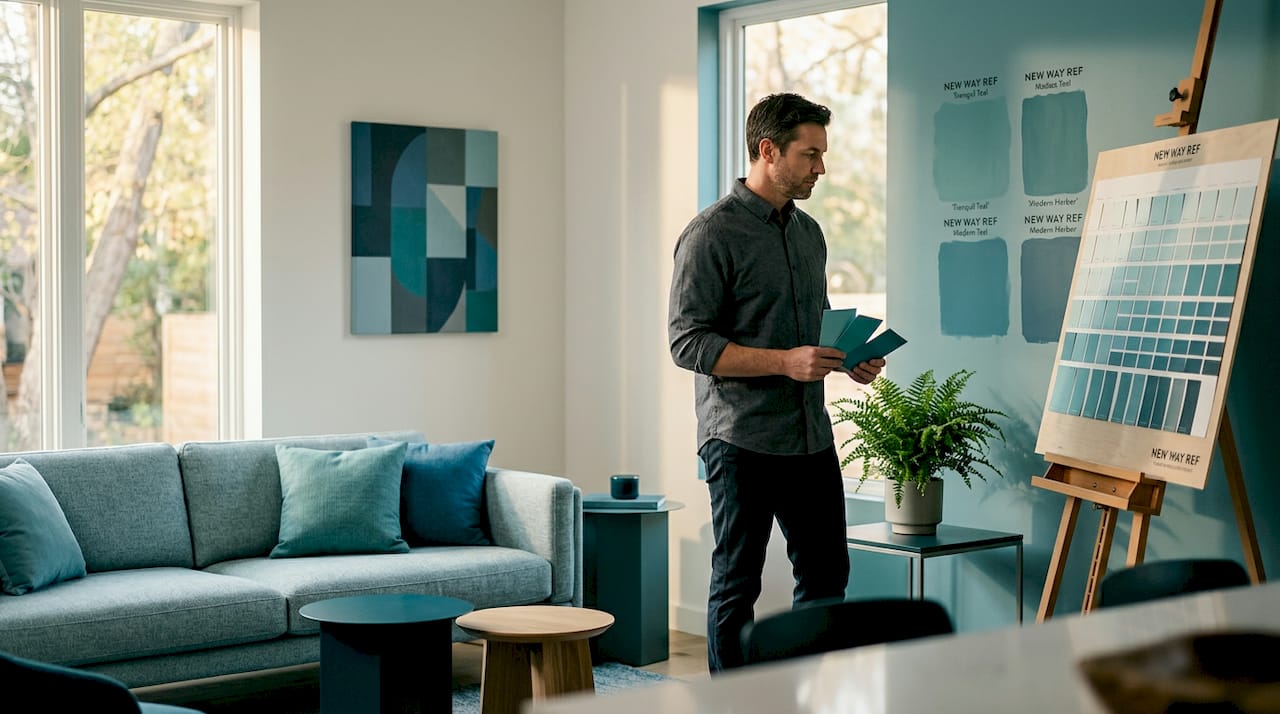
One of the fastest ways to create cohesion across decor style combinations is to limit your palette to 3 to 4 colors. Those colors should be complementary, not just ones you happen to like. A warm-toned room with one cool accent will always feel slightly disconnected. Commit to warm or cool undertones and stay consistent, even as your styles vary.
Here is a quick reference for how to build a solid foundation:
| Foundation Element | Role in Style Mixing | Practical Example |
|---|---|---|
| Neutral walls | Grounds bolder accent pieces | Warm white, greige, or soft taupe |
| Dominant furniture | Establishes the main style tone | A large sectional in your primary style |
| Consistent palette | Connects disparate styles visually | Cream, camel, black, and brass throughout |
| Bridge pieces | Links dominant and secondary styles | A rattan chair with clean modern lines |
Pro Tip: Before you shop, pull every major piece from your room into the center mentally and ask: do these share at least one common trait in color, material, or tone? If not, that is where the disconnection starts.
Bridge pieces deserve special attention. A bridge piece combines attributes of two styles so the eye moves naturally between them rather than jumping. A classic example in modern vintage decor: a wingback chair reupholstered in sleek, contemporary leather. It nods to traditional form but reads as current. That single piece prevents the room from splitting into two separate design collections.
How to mix decor styles step by step
With your foundation in place, you are ready to work through blending interior styles in a practical, room-by-room way. Follow these steps in order and you will avoid most of the common missteps.
-
Identify your dominant style first. Look at the largest pieces you already own or love most. If your sofa is mid-century and your dining table is industrial, your dominant style might actually be modern. Knowing this anchor shapes every decision after it. Check out this interior decor styles guide from Newwayref if you are still figuring out which direction fits you best.
-
Choose your secondary style intentionally. Not all style pairings work equally well. Modern and Scandinavian mix naturally because they share clean lines and minimal ornamentation. Industrial and vintage work because both celebrate raw materials and age. If you are unsure which secondary style complements your dominant one, design surprise pairings like cultural blends often create the most authentic and storied homes.
-
Balance visual weight, not just style. This is where most home design mixing goes wrong. A heavy, ornate Victorian sideboard next to a slender Parsons table creates tension that has nothing to do with style and everything to do with scale. Pair pieces of similar visual weight even when their styles differ. The balance feels instinctively right even if readers cannot explain why.
-
Layer textures deliberately. Mixing styles without mixing textures produces flat results. Aim for 3 to 4 distinct textures per room: something smooth, something rough, something soft, and something with sheen. A concrete lamp base next to a linen throw next to a lacquered tray. Each texture adds depth without competing for attention.
-
Repeat finishes across the room. Matching brass finishes in lighting, hardware, and decorative items creates subtle but powerful visual unity. When the same material shows up in three places, the room reads as intentional. It does not matter that the pieces around it span two or three different styles.
-
Use art and accessories as your unifying thread. A single piece of art can hold two very different styles together by pulling colors or forms from each. For practical tips on this, the Newwayref guide on mixing home accessories walks through exactly how to accessorize a mixed-style room without overdoing it.
Pro Tip: Place your accent pieces last, not first. Let the furniture establish your style story, then use accessories to underline it. Going in the opposite order almost always leads to a cluttered result.
Start with a clean, simple backdrop so that your style contrasts have room to breathe. Think of a monastic white wall as the silence between musical notes. The contrast only lands because of the calm around it.
Common mistakes when combining design styles
Even with a solid plan, certain patterns derail rooms again and again. Knowing what to watch for saves you time and money.
- Too many styles at once. Limiting your room to 2 to 3 main styles is a hard rule worth following. Four or five competing styles do not create richness. They create confusion. Every additional style demands the eye’s attention, and eventually attention is everywhere and nowhere.
- Ignoring undertones in color. You can have a limited palette and still clash. Warm gray and cool gray side by side will always feel slightly wrong, even if both are neutral. Check that all your chosen colors share warm or cool undertones before committing.
- Mismatched scale. A petite occasional chair facing a massive sectional does not just look strange stylistically. It disrupts the room’s sense of proportion entirely. The 80/20 rule in style mixing recommends keeping 80% of your space cohesive and using only 20% for contrast. Pushing beyond that ratio is when rooms start feeling chaotic.
- Forgetting to edit. Removing pieces that compete or clash restores balance just as effectively as adding the perfect new item. Walk through your room and ask which items are pulling focus without earning it. Less is consistently more in home design mixing.
“Contrast is vital but should be thoughtful. Pairing rough with smooth or matte with glossy sustains visual interest without creating chaos.” — Michelle Rose Design
Pro Tip: Take a photo of your room. Looking at it on a screen instead of standing in it gives you immediate distance and makes imbalances far easier to spot.
Knowing when your style mix is working
The best decor style combinations share a few recognizable qualities. You will know your approach is working when you walk into the room and feel settled, not stimulated in a fatigued way. A well-mixed space should feel layered and personal, like it collected meaning over time rather than arriving all at once from a single catalog.
Watch for these signs that your mixed-style room has landed:
- The room has a clear focal point. Your eye knows where to start and where to travel next.
- Every style represented has at least two or three moments in the space, not just one orphaned piece.
- Colors, finishes, or materials repeat at least twice, creating quiet visual rhythm.
- Textures vary but do not fight each other. Rough and smooth coexist. Matte and reflective play off each other.
- You can remove the labels. If someone could not tell you aimed to mix styles and just experienced it as a curated space, you have done it right.
Flow between rooms matters too. Eclectic decor ideas that work well in one room should inform adjacent spaces, even if not replicated exactly. Carry a color, a finish, or a material from room to room and your whole home will feel connected without feeling repetitive. Accent pieces and accent lighting are the easiest way to thread that connection throughout your space without redesigning every room at once.
Do not be afraid to revisit. Great mixed-style rooms evolve. You add a piece. You remove something that no longer fits. The space grows with you, and that is exactly what makes it feel genuinely yours.
My honest take on mixing styles
I have seen homeowners spend months planning a mixed-style room and still end up with something that feels off. And I have seen people pull together a space in an afternoon that looks deeply intentional. The difference almost never comes down to budget or even taste. It comes down to discipline.
The 60-30-10 rule and bridge pieces are not just theory. They work in practice because they force you to make decisions before you fall in love with something that does not belong. I have watched people buy a striking piece they loved, bring it home, and spend the next year trying to build a room around it. That is a losing strategy. Lead with your framework, then find the pieces.
What I have found most homeowners underestimate is patience. A room that mixes styles well usually takes time. You live with a space, notice what is missing, and fill it thoughtfully. Rushing the process means filling gaps with anything that fits rather than the right thing. That is how rooms end up feeling assembled rather than considered.
My strongest advice: prioritize connection over trends. Eclectic interiors that last are not the ones that followed what was popular in 2024 or 2025. They are the ones built around what the homeowner actually lives with and loves. Trends are useful for inspiration. They make terrible foundations.
— Enn
Transform your space with Newwayref
If you are ready to put this guide to work, Newwayref has the pieces to make it happen. From thoughtfully curated accent furniture and modern home accessories to lighting that ties a room together, the collection is designed for exactly this kind of intentional, layered decorating. Whether you need a bridge piece that connects two styles or a statement accent that pulls your palette together, you will find options that fit the approach. Explore the full collection at Newwayref and find the pieces your space has been waiting for. Free shipping is available on orders over $50.
FAQ
What is the 60-30-10 rule for mixing decor styles?
The 60-30-10 rule divides a room into 60% dominant style, 30% secondary style, and 10% accent pieces. This distribution creates balance and gives each style enough presence to feel intentional.
How many decor styles can you mix in one room?
Stick to 2 to 3 main styles per room. Exceeding that number tends to create visual clutter and makes it harder for any single style to read clearly.
What are bridge pieces in interior design?
Bridge pieces are items that share traits of two different styles, helping the eye move naturally between them. A good example is a classic chair form upholstered in a modern, minimalist fabric.
How do you keep a mixed-style room from looking random?
Repeat at least one finish, material, or color across multiple spots in the room. Consistent repetition, whether brass hardware, linen texture, or a warm wood tone, creates unity even when styles vary widely.
Can you mix modern and vintage decor successfully?
Yes. Modern vintage decor works especially well when you anchor with neutral walls and let each style appear in proportion. Use the 60-30-10 split, keep your color palette tight, and select a bridge piece that nods to both eras.